NeuroKinetic Therapy Clarifying the “Why” Behind Persistent Patterns
NeuroKinetic Therapy (NKT) is one of the main assessment tools I use in my work. Often, the area or site of pain, strain, or recurring symptoms is not the primary problem, but a sign of how the body has adapted over time.
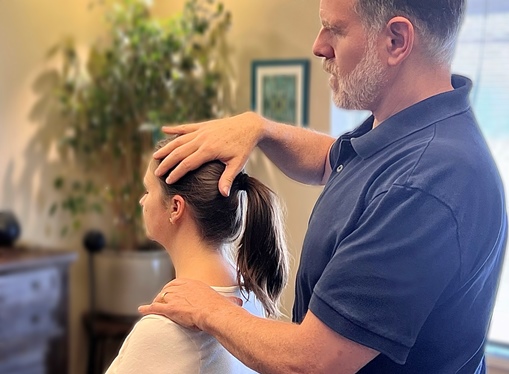
NKT helps me look beneath the surface to understand how movement is being organized—where certain muscles or structures may be working too hard, while others are not contributing as effectively. This can help clarify why an issue keeps returning, even when the painful area itself has been treated.
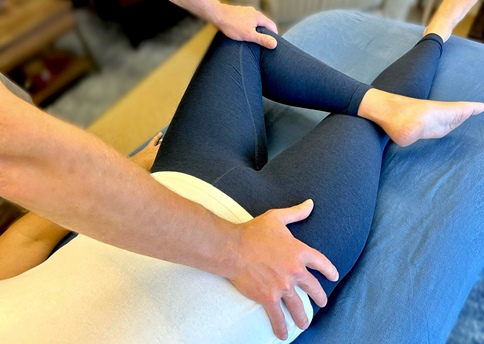
NKT is an assessment-based approach that uses manual muscle testing to evaluate how the nervous system is coordinating movement. By using the body’s own neuromuscular system to observe how specific structures respond to gentle activation, patterns of compensation are revealed—showing where the body may be relying on substitute strategies rather than efficient coordination.
What NKT Looks For
Your body is intelligent. Pain and symptoms are rarely random, often reflecting adaptation.
When an area loses stability, timing, strength, or when pain is present—often following injury, stress, or repetitive use—the nervous system may attempt to solve the problem by outsourcing the job to other muscles, or even to ligaments or joints. While this can be effective in the short term, over time it may contribute to:
- persistent tension that doesn’t respond well to stretching
- restricted or asymmetrical range of motion
- irritation in joints or tendons
- movement patterns that feel unstable, effortful, or inconsistent
NKT helps clarify which patterns may no longer be serving you, and where your body may be compensating rather than moving with ease and efficiency.
NKT as Part of an Integrative Approach
NKT is not used in isolation. It is one of several assessment and treatment tools I integrate into sessions, guided by your symptoms and by how your body presents. NKT helps clarify movement patterns and compensations that may be contributing to strain or pain, while hands-on manual therapy addresses tissue quality, joint mobility, and overall ease of movement.
This work is integrated with other manual therapy approaches, such as the Hendrickson Method and Myofascial Release, based on what your body reveals during assessment and how it responds to treatment.
Connecting
If you’d like to learn more or explore working together, you’re welcome to reach out.
CONTACT RANDY
- A non-invasive treatment.
- Safe and effective for many conditions.
- Relatively quick treatment.
- Helps to identify the underlying causes of pain.
- Helps to develop a more effective treatment plan.
- Helps to achieve more effective pain relief.
- Helps to prevent issues from recurring.

It’s important to note that NeuroKinetic Therapy should be performed by trained professionals who have received certification in the technique. Randy Lind has undergone specific training to understand the assessment process, manual therapy techniques and corrective movements associated with NKT.