What Is Myofascial Release?
The myofascial system is the combined network of muscle and fascia that plays a central role in movement, posture, and load transfer. When this system is healthy, tissues adapt smoothly to movement and stress. When adaptability is reduced—due to injury, inflammation, repetitive strain, surgery, or long-standing compensatory patterns—restrictions may develop that contribute to pain, stiffness, or altered movement mechanics.
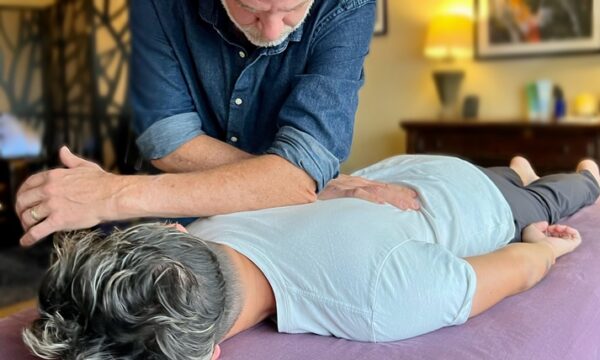
Myo refers to muscle. Fascial refers to fascia—the connective tissue that surrounds, supports, and links muscles, joints, nerves, and organs throughout the body.
Myofascial release is a hands-on manual therapy technique that uses gentle, sustained pressure to support improved tissue mobility when those restrictions are clinically relevant.
Why “Tight” Tissue Is Not Always the Problem
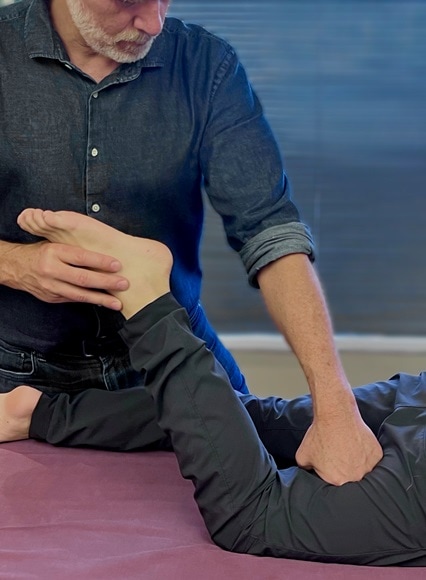
Tissue that palpates as tight is not always tissue that should be released.
Within the neuromuscular system, dysfunction follows a hierarchy. Areas of pain or palpable tension are often secondary—responding protectively to issues elsewhere in the body. In many cases, these tissues are already neurologically inhibited and acting as a response rather than the primary driver of dysfunction.
Releasing or stretching tissue that is not yet ready can result in:
- Short-lived relief
- Increased post-treatment soreness
- Ongoing symptom recurrence
In these situations, tightness reflects compensation rather than cause.
How Myofascial Release Is Used Clinically
Treatment is guided by assessment—not by tissue texture alone.
Movement patterns, joint mechanics, neuromuscular control, and load distribution are evaluated to determine what needs to be addressed first. When higher-priority issues are resolved, secondary myofascial tension often decreases without direct intervention.
I use myofascial release selectively and sparingly, only when it supports the broader treatment plan. When indicated, it is applied precisely to:
- Reduce barriers to joint or movement-based work
- Improve tissue tolerance to other manual techniques
- Support more effective neuromuscular re-education
The emphasis is on minimum effective input, not prolonged or generalized tissue work.
What to Expect During a Session

When used, myofascial release is applied slowly and deliberately and typically occupies only a portion of the session.
- Pressure remains comfortable and well tolerated
- You may be guided to breathe or make small movements
- Sensations often change as tissue response evolves
- Treatment is continuously adjusted based on assessment and feedback
Myofascial release is always integrated with other manual therapy and movement-based techniques rather than used in isolation.
What This Means for Your Care
This integrated approach supports care that is both effective and efficient:
- Less unnecessary tissue work
- Better carryover between sessions
- Reduced symptom recurrence
- Clearer, more sustainable progress
Careful assessment and attentive listening guide this work, so release follows the body’s readiness—supporting change that is both gentle and clinically precise.