Listening Before Fixing
Most people seek out manual therapy because pain, or movement limitations haven’t fully resolved despite other treatments. What often keeps them searching is not just the discomfort, but wanting someone to listen to their body—and provide real clarity about why symptoms keep returning.
Research on chronic pain shows that symptoms often persist not because of ongoing tissue damage, but because of how the nervous system coordinates the body’s responses to injury—a perspective reflected in evidence-based reviews of manual therapy published through the National Institutes of Health.
Manual therapy, as I practice it, begins with careful assessment and a simple goal: understanding why the body is doing what it’s doing, as a whole system, rather than treating symptoms in isolation.
Symptoms Rarely Tell the Whole Story
It’s tempting to focus treatment on what feels tight, weak, or restricted. But tightness and pain are often a responses, not the root of the problem. It may reflect how the body is protecting itself, adapting to load, or compensating for something that’s happening elsewhere—or has happened before.
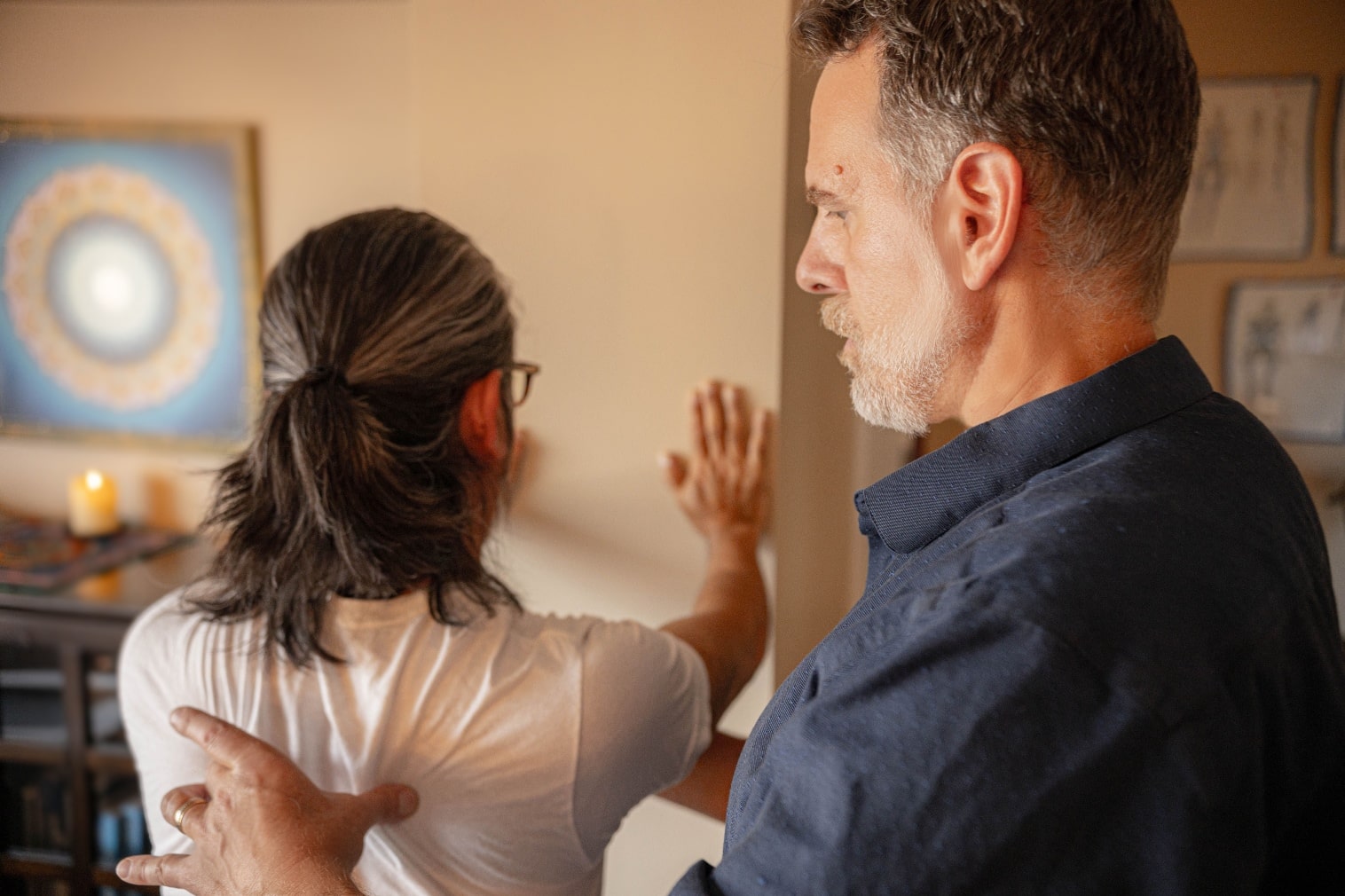
This is where a manual therapy approach becomes most effective—not as a collection of techniques, but a coherent, integrated way of working. Through movement observation, orthopedic testing, and neuromuscular evaluation, we can begin to understand how different parts of the body are working together—or working against, or around, one another.
In this context, touch is not simply something done to the body.
It’s a way of asking questions. Then we pay close attention to how the body answers.
Three Questions That Shape the Work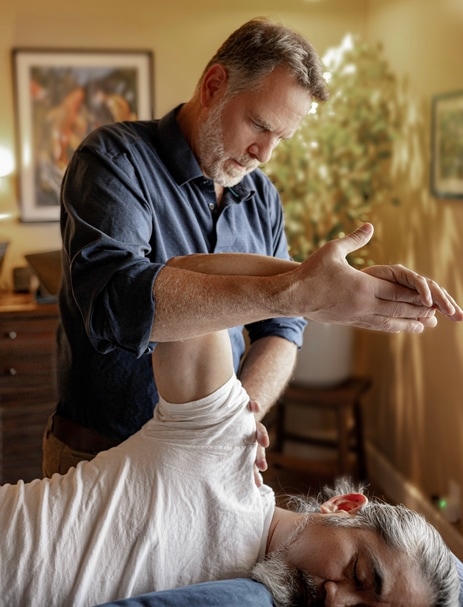
Rather than applying a standardized treatment, each session is guided by three essential questions:
What is the body asking for right now?
Pain, stiffness, weakness, or recurring tension are signals. They reflect how the body has adapted over time to keep moving and functioning. Manual therapy begins by responding to what is present, rather than overriding it.
What patterns are sustaining this experience?
Symptoms often appear far from their source. A shoulder issue may be influenced by the rib cage or spine. Foot pain may reflect how the hips and pelvis manage load. Understanding these relationships helps explain why symptoms persist—or return.
What kind of input will support change that lasts?
Relief matters. But lasting change depends on improved organization, coordination, and efficiency throughout the system—not just temporary release at the site of pain.
Following the Body’s Readiness
Careful assessment and attentive listening guide this work, so release follows the body’s readiness—supporting change that is both gentle and clinically precise.
Rather than imposing correction, manual therapy respects the body’s inherent intelligence. It follows the information the body provides through movement, tone, and response. Change is invited, not forced.
This approach is often quieter than people expect.
The work can feel subtle.
The effects, however, are not.
What This Means for Care
When manual therapy is practiced this way, outcomes arise through collaboration—between therapist, client, the nervous system, and the tissues themselves—rather than through force.
 This is why the work can be beneficial for a wide range of people and support a wide range of conditions, from chronic pain and stiffness to nerve-related symptoms and movement limitations. Each situation is addressed within the context of how the whole body is functioning.
If you’re looking for a clear, practical explanation of what manual therapy involves and how sessions are structured, you can read more about my approach on the Manual Therapy page.
A Closing Thought
Manual therapy works not because hands are magical, but because attention and presence matter—how force is applied, how listening happens, and how power is used in relationship with the body.
When skill, attention, and timing come together, the body often does exactly what it has been waiting to do—release unnecessary effort, reorganize, and move forward with greater ease.
This article is part of a Start Here sequence. You may also want to read Power & Touch, which explores how ideas about force, authority, and listening directly shape the way hands-on work is applied in my clinical manual therapy practice.